
OpenAI data centers will cut power on demand. Here's who pays
OpenAI will cut power at its own data centers when the US grid strains, starting with a Georgia campus that can shed 1 GW. The pledge skips leased sites and leaves the numbers for later.
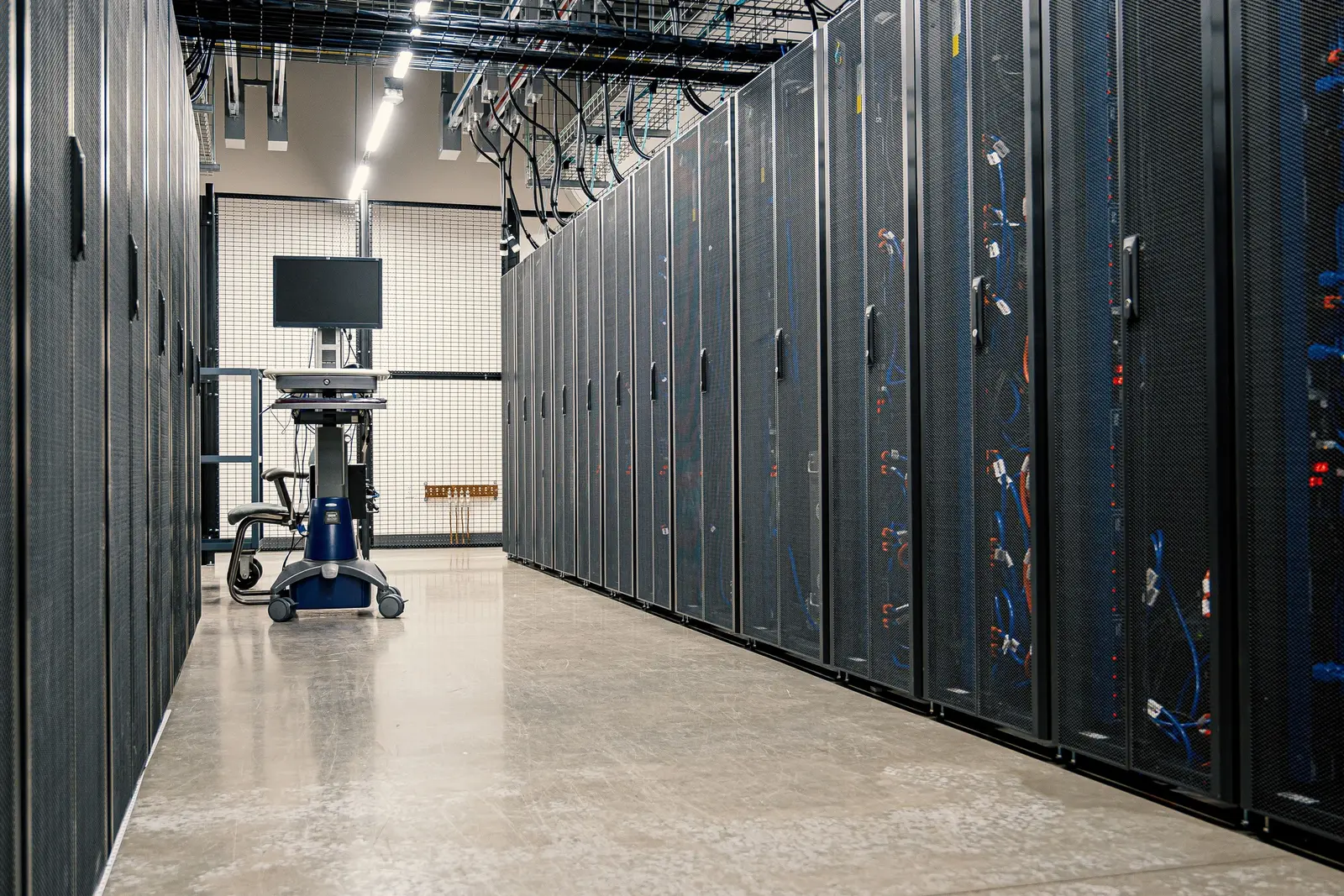
OpenAI's data centers and the US power grid now have a written arrangement, and it is narrower than the announcement reads. Under a program called Grid Protectors, announced on 2 November, OpenAI will reduce electricity demand at computing campuses it owns and operates when the grid is under stress, agreeing the terms with each local utility in advance. The model is a Georgia campus that can drop up to 1 GW of a 3.2 GW load on request.
Scale explains the interest. US data center capacity is projected to exceed 100 gigawatts by 2030, and AI is a growing share of that. Energy Digital's company fact box puts OpenAI's own compute capacity at 1.9 GW in 2025, so one fully built Georgia campus would be larger than the company's entire footprint that year.
What the program actually commits OpenAI to
The program applies to future campuses. Nothing in it changes how existing sites run. For each site OpenAI owns and operates, the company says it will design the facility to reduce electricity use on request and negotiate with the utility how much demand can be cut, how fast and for how long. Where local equipment allows, it will send power back from on-site generation or batteries and use power controls to smooth sudden demand swings.
A separate National Community Compact published alongside the grid program adds transparency commitments. The concrete ones:
- No non-disclosure agreements with public officials, apart from narrow exceptions for security information, trade secrets and commercially sensitive material.
- A named local contact for residents for the life of each campus.
- Published site plans covering construction effects, independent noise studies, water use, energy costs and economic impact.
- Insurance against stranded assets if a project is delayed, reduced or cancelled.
Nothing in the documents sets a national figure for how many megawatts OpenAI will shed, and nothing sets a deadline for the leased sites that make up much of its compute.
The Georgia numbers: 3.2 GW, and 1 GW it can switch off
The national program is modeled on Project Camellia, a campus planned for Effingham County, Georgia. At full build-out it is projected to draw 3.2 GW under a 25-year contract with Georgia Power, delivered in phases between 2028 and 2032 so the whole load does not land on the grid at once. Up to 1 GW of the contract is flexible demand response: Georgia Power can cut the power it supplies to the campus during high-demand events, which makes it the first arrangement of its kind between the utility and a data center customer.
Construction is targeted to begin in late 2026, with full build-out investment estimated at $20 billion to more than $30 billion. OpenAI covers all of the infrastructure and electric-service costs tied to the project, and the contract states that Georgia households are shielded from rate increases connected to it. The package includes an $80 million community benefits fund, with up to $71 million of it in educational credits for Georgia students. The Georgia Public Service Commission approved the contract around 26 August.
The catch: only campuses OpenAI owns are covered
Both documents apply to sites owned and operated by OpenAI. The company leases a large share of its compute and develops some of it with partners, and neither document says whether those sites carry any of the same obligations. A megawatt saved at a leased facility helps the grid as much as one saved at an owned campus, so scope is the first thing to check before reading this as an industry-wide commitment.
The community spending promises are the thinnest part of the package. Data Center Dynamics reported that the commitments on local investment are less specific than those on energy and transparency.
Who pays for the power lines
OpenAI's cost argument rests on how grid expenses get shared. Power lines, substations and other infrastructure cost the same to build whether demand is low or high. A campus that draws steadily all year spreads those fixed costs across more kilowatt-hours sold, and one that steps back at peak limits the need for upgrades sized to a few hours of the year. Whether that reaches other customers' bills depends on the tariff the utility and its regulators agree. In Georgia the contract puts the project's infrastructure costs on OpenAI. Other states have not settled it.
Why it landed in November
The timing is political. Data Center Dynamics reports that 56 percent of voters in midterm exit polls said AI data centers were a crucial or major factor in their congressional vote decision, and that voters came out against projects and in favor of moratoriums in several places. A pledge to step back from the grid during a cold snap is cheaper than losing a county approval.
What to watch before 2028
The numbers that decide whether this works are not public: how many megawatts each future campus will agree to shed, how fast it can drop them, and how the utility credits that capacity. OpenAI says arrangements will differ by location and further commitments will be shared as they are finalized. Project Camellia's construction start, targeted for late 2026, is the first date to check. The first delivery phase in 2028 is where flexible demand either shows up in a signed contract or stays a press release.
6.5 / 10
$0
Best for Readers working out whether an AI data center pledge near them is worth trusting
Pros
- The Georgia contract has real numbers: 1 GW of flexible demand on a 3.2 GW campus, with infrastructure costs on OpenAI.
- First demand-response deal of its kind between Georgia Power and a data center customer.
- Transparency pledges are specific: no NDAs with officials, published noise and water studies, a named local contact.
Cons
- Covers only campuses OpenAI owns and operates, leaving leased capacity unaddressed.
- No published shed figures for any future campus beyond Georgia.
- Community investment promises are the vaguest part of the package.
The Georgia contract is worth reading and the demand-response clause is real. The national program is a promise about campuses that do not exist yet, and it stays quiet on the leased capacity that carries much of OpenAI's compute.
Frequently asked questions
- Will OpenAI's data centers raise my electricity bill?
- In Georgia, the contract says no: OpenAI covers 100 percent of the project's infrastructure and electric-service costs, and households are shielded from rate increases tied to it. Elsewhere it depends on the tariff regulators approve, and per-site terms are not published yet. Your state utility commission is where those terms get decided.
- What is OpenAI's Grid Protectors Program?
- A pledge announced on 2 November that OpenAI will design future campuses it owns and operates to cut electricity use when the grid is strained, and agree the size and speed of those cuts with the local utility. Where equipment allows, campuses will also supply power from on-site generation or batteries.
- How much power will the Georgia campus use?
- 3.2 GW at full build-out under a 25-year Georgia Power contract, delivered in phases between 2028 and 2032. Up to 1 GW of that is flexible demand response the utility can call on during high-demand events. Construction is targeted for late 2026.
- Does the pledge cover data centers OpenAI leases?
- No. The Grid Protectors Program and the National Community Compact apply to sites OpenAI owns and operates. The company leases a large share of its compute and develops some with partners, and the documents do not say whether those facilities carry the same obligations.
- Can these commitments be enforced?
- Partly. The Georgia terms sit in a 25-year contract approved by the state's Public Service Commission, so they can be enforced there. The national program is a set of published promises with no stated penalty, and OpenAI says more commitments will follow as arrangements are finalized.
Sources
- OpenAI: Setting a new standard for responsible AI infrastructure
- OpenAI: Introducing the Grid Protectors Program
- Crypto Briefing: OpenAI launches Grid Protectors Program to cut data center power use during emergencies
- Energy Digital: OpenAI's plan to stop AI data centres overloading the grid
- Data Center Dynamics: OpenAI promises to drop NDAs and increase community transparency
More tools worth a look

AI scores 84.5% on drug chemistry and still misses the pick
AI can reconstruct molecules and explain experimental evidence well. Choosing which compound to make next, and predicting its properties, is still where models fall down.

Is ChatGPT Enterprise worth it at $1 for 2 million federal staff?
Two Japanese financial firms ran ChatGPT Enterprise pilots and published the ROI: 954% and 203%. What those numbers measure, what they leave out, and who should skip the upgrade.

AI in universities: what students get and what it costs
Universities use AI for lesson planning, student support, assessment rules and admin, mostly through ChatGPT Edu licences. Surveys put weekly student use at 81% and pricing stays unpublished.