
Anthropic IPO valuation: $83 a share, $1.3 trillion at close
Anthropic sold 980 million shares at $83, raised $81.3 billion and closed its first day near a $1.3 trillion valuation. The listing puts quarterly earnings pressure behind Claude's pricing.
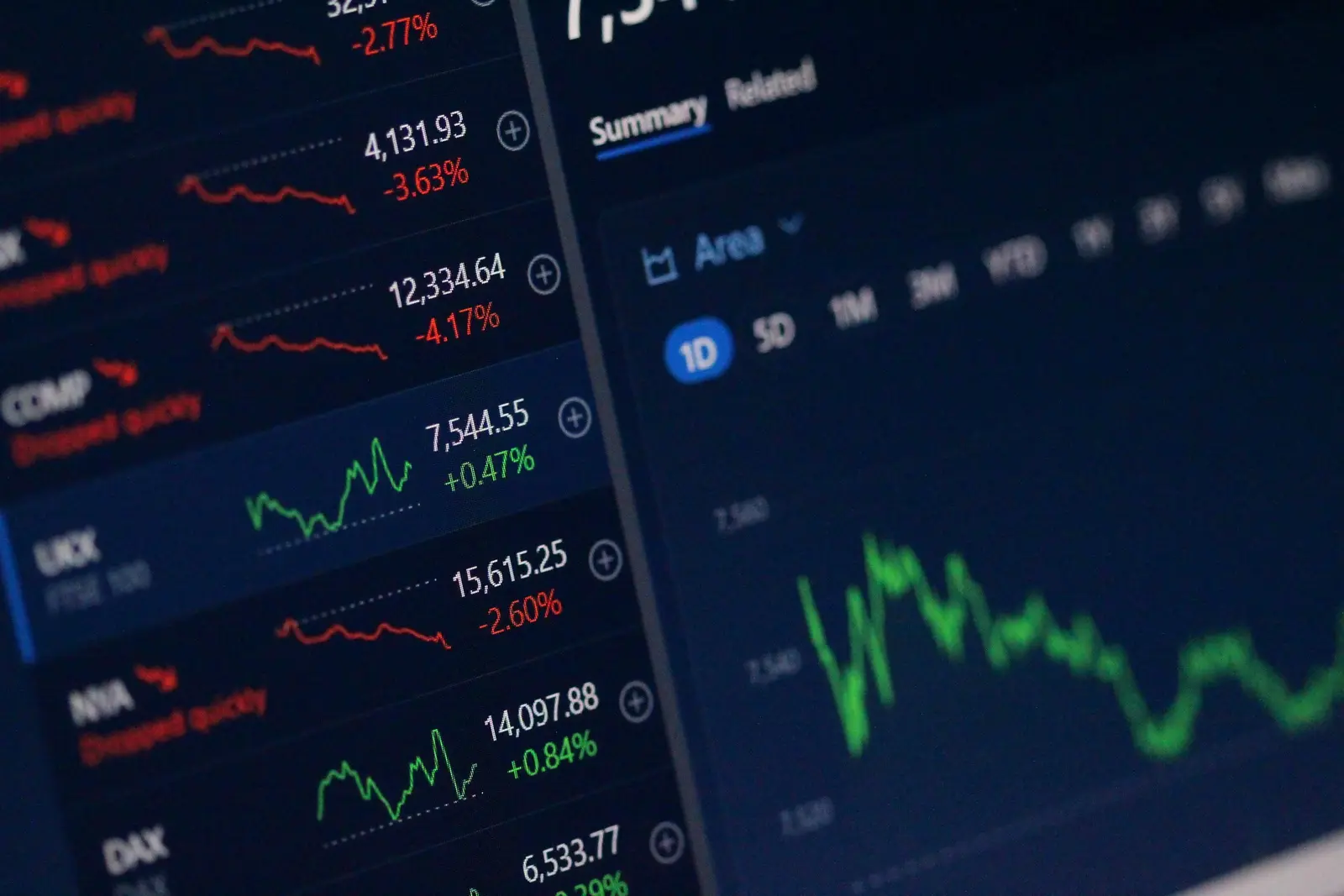
Anthropic's IPO valued the company at roughly $1.3 trillion by the end of its first trading day, when the stock closed at $97.17, up more than 17% from the $83 offer price. Count every share and option and the number is closer to $1.77 trillion. Count only shares outstanding and it's nearer $1 trillion. All three figures come from the same day's trading.
The offer priced at $83 the night before listing, above the $70 to $78 range Anthropic had been marketing, and 980 million Class A shares sold instead of the 825 million planned. That raised $81.3 billion, which CNBC reported and which beats the $75 billion SpaceX raised in June. The Los Angeles Times put the raise above $100 billion, a number the paper doesn't break down and one I can't rebuild from 980 million shares at $83. Shares trade on the Nasdaq under ANT.
Why the valuation moves by hundreds of billions
The gap between $1 trillion and $1.77 trillion is arithmetic, not a disagreement about the company. The Wall Street Journal reported a fully diluted value of about $1.5 trillion at the offer price, with market value excluding stock options closer to $1 trillion. Mark that diluted count to the $97.17 close and you land near $1.77 trillion, the figure New York magazine's live blog used when trading ended. The LA Times' $1.3 trillion sits between them. Any company with billions of options outstanding will have this problem in its headline number.
The underwriters, Goldman Sachs and Morgan Stanley among them, hold a 30-day option on another 147 million shares. Exercise it and the raise grows again.
The revenue is real, and so is the loss
Anthropic booked $33.24 billion in revenue in the nine months to September 30, up about 1,200% year over year according to The Decoder. The LA Times put the growth at 1,400%. The two outlets are working from the same filing and rounding a very steep curve differently. By the end of October, annualized revenue had reached roughly $81 billion.
The product behind that ramp is Claude Code. The Decoder credits the coding tool with driving the enterprise business, which matches how developer tools usually spread: one engineer puts it on a card, then the employer signs a contract.
Net losses for the same nine months widened from $25.1 billion to $104 billion. That sounds like a company setting money on fire and mostly isn't. Anthropic attributes the loss primarily to revaluations of convertible notes and derivative liabilities, which are accounting marks on instruments that got more expensive as the company's own valuation climbed. No cash left the building for most of it.
Who got paid on day one
The seven co-founders each sold 3.38 million shares, $1.96 billion between them, and none of that money went to Anthropic. Amazon and Google each hold stakes worth more than $100 billion. Microsoft, Nvidia and AMD put in another $26 billion at the offering price. Thousands of employees became millionaires on paper, per New York's account. Further down the cap table sit Ashton Kutcher and the pension funds that pay Los Angeles teachers and police officers.
The LA Times calls the debut a barometer of Wall Street's appetite for AI, and that's the honest framing. Hundreds of billions have gone into AI companies already, most of it from professional investors. A record IPO is the moment ordinary shareholders get to bid on the same story.
What going public changes if you pay for Claude
Anthropic's prospectus leans on curing diseases and accelerating scientific research. The business leans on selling Claude to companies. Going public adds a third audience that gets a number every three months.
None of the IPO coverage mentions consumer subscription prices, and I'm not going to invent a forecast. What I'd watch is contract pricing. A public company carrying a $104 billion loss has an obvious lever, and that lever is what large customers pay per seat or per token. If you're on a Team or Enterprise plan, your renewal clause matters more now than it did in 2023, when this was a 150-person lab with a cramped office bragging about having hundreds of customers. People on free or individual plans have less exposure in the near term.
7.5 / 10
$83
Best for Teams already paying Anthropic who need to judge whether a public listing changes their renewal math
Pros
- Revenue of $33.24 billion in nine months, driven by a named product rather than a vague platform story
- Backing from Amazon, Google, Microsoft, Nvidia and AMD, which is hard to replicate
- Quarterly filings mean more financial visibility than a private lab gives you
Cons
- A $104 billion net loss, even if it is mostly accounting marks
- Public companies tend to find pricing levers when they report every quarter
- The headline valuation swings by hundreds of billions depending on share count
As a vendor to build a workflow on, Anthropic now shows its numbers four times a year, which is more than most AI labs offer. The $83 offer price isn't what you pay; your exposure is your contract terms, and those are worth rereading before the first earnings call.
The uncomfortable part
Anthropic was founded in 2021 by researchers who left OpenAI over concerns that commercial incentives were beating safety ones. NPR's coverage of the listing points out that the company's own warnings about catastrophic risk now sit next to a share price and an earnings calendar, and that some of the people getting rich aren't celebrating. Both facts are consistent. A safety-focused lab can go public. Whether the safety posture survives is now a question the company answers in public four times a year, which is more scrutiny than it had as a private lab and less than its critics want.
If you're deciding whether Anthropic is a reasonable vendor to depend on, the listing helps you. Read the quarterly filings instead of the launch posts. Then check two things in your own account before the next renewal: whether your inputs train future models, and what your rate does at the end of the contract term. Neither answer comes from a share price.
Frequently asked questions
- What is Anthropic's valuation after the IPO?
- About $1.3 trillion at the first-day close, according to the Los Angeles Times. Excluding stock options it's nearer $1 trillion, and fully diluted it's about $1.5 trillion at the $83 offer price, or roughly $1.77 trillion at the close. The headline depends on which shares you count.
- How much did Anthropic raise in its IPO?
- $81.3 billion, per CNBC: 980 million Class A shares at $83 each. The Los Angeles Times reported a total above $100 billion without breaking it down. Either way it beats SpaceX's $75 billion from June, the previous record.
- What stock ticker does Anthropic use?
- ANT, on the Nasdaq. The shares priced at $83 and closed their first day at $97.17, a gain of more than 17%.
- Is Anthropic profitable?
- No. It lost $104 billion in the nine months to September 30 on $33.24 billion of revenue. Most of that loss comes from revaluations of convertible notes and derivative liabilities rather than day-to-day operations, so it is a poor guide to whether selling Claude makes money.
- Does the IPO change what I pay for Claude?
- No pricing change appears in any of the coverage. What changes is the incentive: public companies report revenue every quarter, and enterprise contracts are where Anthropic's revenue comes from. If you're on a Team or Enterprise plan, read the renewal clause before the next cycle.
- Who owns most of Anthropic after the listing?
- Amazon and Google each hold stakes worth more than $100 billion. Microsoft, Nvidia and AMD bought another $26 billion at the offering price. The seven co-founders sold 3.38 million shares each, $1.96 billion combined, and that money went to them rather than to the company.
Sources
- The Decoder: Anthropic's $81.3 billion IPO shatters SpaceX's record
- Los Angeles Times: Anthropic's record IPO nets huge windfall for L.A. investors
- NPR Machine Gods: Anthropic's record IPO, and what Kevin got wrong about the company in 2023
- New York Magazine: Anthropic got rich with record-breaking IPO, as it happened
More tools worth a look

AI scores 84.5% on drug chemistry and still misses the pick
AI can reconstruct molecules and explain experimental evidence well. Choosing which compound to make next, and predicting its properties, is still where models fall down.
Is ChatGPT Enterprise worth it at $1 for 2 million federal staff?
Two Japanese financial firms ran ChatGPT Enterprise pilots and published the ROI: 954% and 203%. What those numbers measure, what they leave out, and who should skip the upgrade.

AI in universities: what students get and what it costs
Universities use AI for lesson planning, student support, assessment rules and admin, mostly through ChatGPT Edu licences. Surveys put weekly student use at 81% and pricing stays unpublished.