
Singapore Airlines' Kris bot: 2x satisfaction, 10% faster calls
Singapore Airlines moved Kris from scripted dialog flows to OpenAI models and says satisfaction doubled with 10% faster call handling. The figures are company-reported, with no audit.
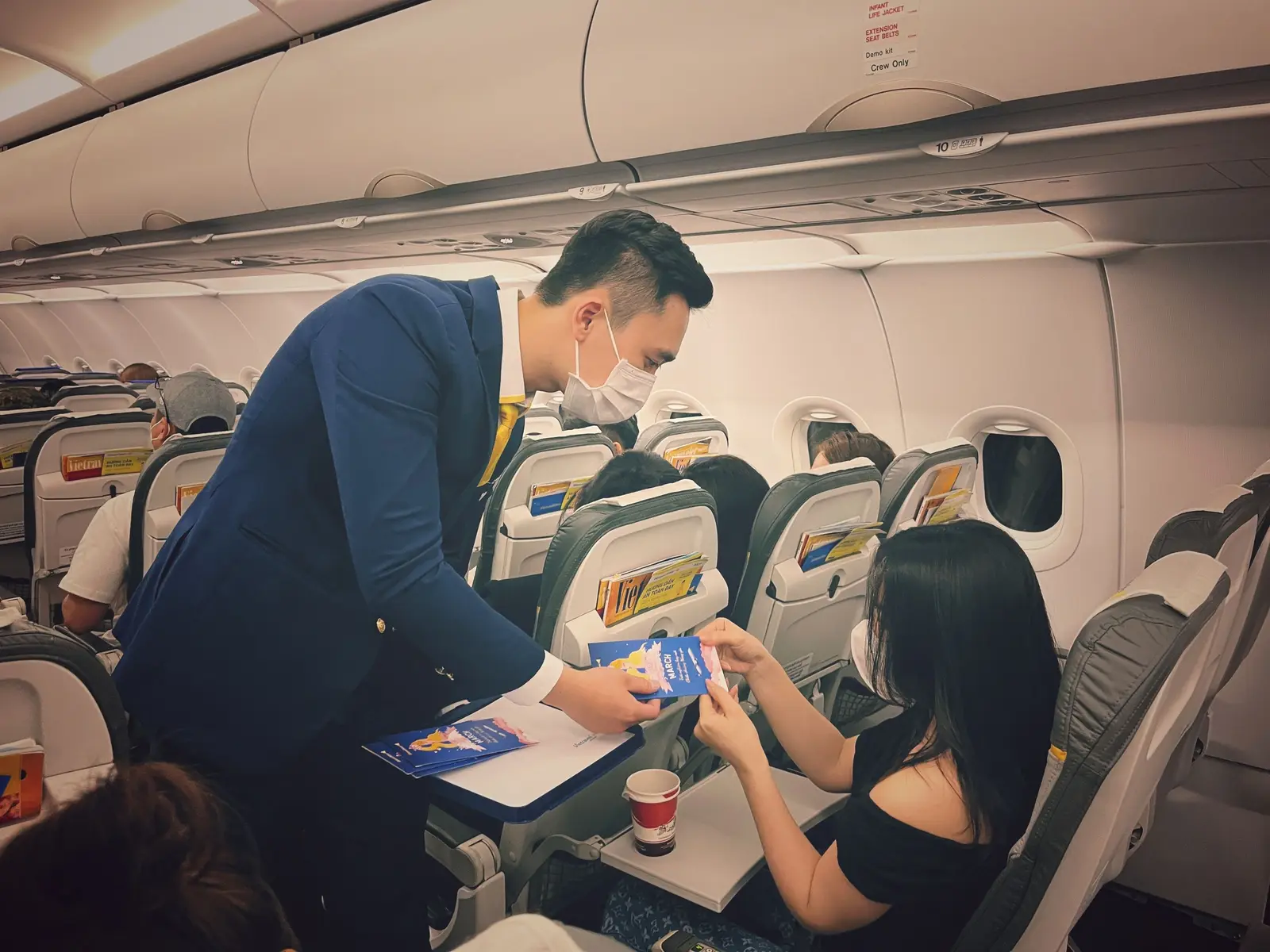
The Singapore Airlines OpenAI chatbot is Kris, the airline's customer-facing assistant, and it now runs on OpenAI models through the API instead of the hand-built dialog flows it used before. Singapore Airlines reports that customer satisfaction with the bot doubled after the migration, and that AI-assisted call summarisation cut average handling time for its human agents by roughly 10%. Those are the airline's own figures, published in an OpenAI customer story dated 11 November 2026, with nothing behind them but the two companies' word.
What changed inside Kris
The old Kris ran on dialog flows. Every topic was mapped by hand and every conversational path was written in advance, so coverage grew one flowchart at a time, and a question outside the map usually ended with a handoff to a person. The LLM version handles phrasing nobody scripted. Singapore Airlines describes Kris as covering general inquiries, special requests, live information about flight disruptions and some transactional procedures, with booking changes and baggage transactions still being added.
That staging matters if you're judging the deployment. The bot is in production for the low-risk conversational work and still growing into the jobs where a wrong answer costs money or strands someone at a gate. The useful part for anyone running a support desk is which jobs the airline handed over and which it kept.
Why the scripted design stopped scaling
Dialog flows are cheap, predictable and easy to audit. You can point at the line that produced any answer. What they can't do is cover ground nobody anticipated. The topics that never get drawn are the long tail, and the long tail is where a support queue spends most of its hours. An LLM assistant gets broad coverage by default and moves the work to constraining and checking what it says. Neither design is free; the cost shifts from authoring to supervision.
The two numbers, and what they leave out
Singapore Airlines reports a 2x increase in Kris's customer satisfaction score. It also reports an approximately 10% reduction in average handling time for customer service representatives after AI tools such as call summarisation went in, so reps spend less time on after-call notes and more time on the next customer.
The satisfaction figure has no published baseline. Doubling from 8% to 16% and doubling from 40% to 80% are the same headline and completely different achievements, and the airline hasn't said which one this is. The handling-time number is easier to reason about because it's measured on people doing a known job. Ten percent of an hour on the phone is six minutes, per rep, per hour, which at call-centre volume is where the money actually sits.
Both figures are company-reported. OpenAI published them in a customer story on 11 November 2026, and there's no third-party audit or disclosed calculation method behind either one. That doesn't make them false. It does mean you should quote them as claims rather than results.
The Flight Recommender figure
The same OpenAI API powers the airline's Flight Recommender, which lets people search itineraries in plain language. Monthly users of that tool tripled over the past year. Usage is a weaker signal than satisfaction, since a threefold rise can come from more people finding the feature as easily as from the feature getting better, but it says something practical about natural-language search: people use it when it's offered.
Where the models sit outside the chatbot
Customer support is one of three deployments. The second is Jarvis, an internal AI platform the airline governs centrally, used for document summarisation, custom workflows and small knowledge bases. The third is software development, where models help teams refine requirements, identify edge cases, draft test cases and run design reviews.
The part worth copying is the wrapper. Singapore Airlines pairs the models with orchestration, internal data controls, validation and human review. That describes a system where the model proposes and a check disposes, which is the difference between a demo and something you let answer a passenger whose flight was just cancelled.
What to watch as transactions move in
Transactions are the hard part. A bot that answers a question badly wastes a few minutes. A bot that changes a booking badly or misstates a baggage fee creates a refund and a complaint, and the recovery costs more than the original query ever did. The airline's description of the rollout, with transactions being expanded and human review in the loop, suggests the change is being staged by risk. Stage it the same way: read-only answers first, then lookups against the customer's own booking, then changes.
Is a doubled satisfaction score plausible
Yes, if the starting point was a flow bot that couldn't answer much. Menus that funnel people into a handful of options do badly on anything outside those options, and a low score is easier to double than a high one. I'd treat the direction as believable, since the airline put its name on the number alongside its model vendor, and treat the size as unconfirmed until a baseline appears. For a passenger, little changes except that answers come from a model rather than a script. The data question that actually matters is whether chat transcripts are retained and used for training, and neither the OpenAI story nor the airline's statements say.
What I'd copy, and what I'd check first
The cheapest transferable win here isn't the chatbot. Call summarisation touches no customers, saves reps real minutes per call, and can be measured against a control group in a fortnight. If you run a support desk, that's where I'd start spending.
For the bot itself, I'd test on your own transcripts before committing to anything:
- Score 200 recent conversations on what your current bot resolves without a human, so you have a baseline to beat.
- Run the same set through the LLM version and track containment and escalation separately. A bot that resolves more and escalates the hard cases faster can still be the better outcome.
- Read the disruption answers closely. A confident wrong departure time is worse than a menu that admits it doesn't know.
- Ask what happens to the transcripts: retention window, whether they're used for training, and where they're stored.
Singapore Airlines can do that last check because it controls its own stack and runs internal tools through a governed platform. A small team buying a support bot off the shelf usually can't see any of it, and should ask before uploading customer conversations.
What the case doesn't tell you
Cost. No contract value, token spend or headcount change is published, here or in the coverage around the story. There's also no figure for how many conversations Kris finishes without a human, or what share still reaches an agent. That makes this a useful template and a thin business case. If you're building an internal pitch, the 10% handling-time figure is the one finance can model, and it scales with your call volume rather than the airline's.
7.5 / 10
$0
Best for Support teams with a scripted bot that keeps falling back to human agents
Pros
- A clear before-and-after on one customer metric
- The handling-time gain comes from call summarisation, a low-risk tool any support desk can test
- The guardrail layer is described: orchestration, data controls, validation, human review
Cons
- No published CSAT baseline, so the size of the gain is unknown
- No third-party audit or calculation method
- No cost figures and no end-to-end resolution rate
A useful template with a thin business case. The 10% handling-time reduction is the number I'd take into a budget conversation, because it's measurable and low risk. The doubled satisfaction figure needs a baseline before anyone quotes it as a result. No contract value was disclosed, so the price sits at zero rather than a guess.
Frequently asked questions
- What is Singapore Airlines' OpenAI chatbot?
- Kris, the airline's customer-facing assistant, rebuilt on OpenAI models through the API. It handles general inquiries, special requests, live flight disruption information and some transactional procedures, with booking changes and baggage transactions still being expanded.
- Did Singapore Airlines replace its customer service agents with AI?
- No. AI-assisted call summarisation cut average handling time by about 10%, which means reps spend less time on after-call notes. Agents still take the calls, and the chatbot escalates to them when a query falls outside what it handles.
- Is the 2x customer satisfaction increase verified?
- No. It's a company-reported figure published in an OpenAI customer story on 11 November 2026, with no third-party audit, no published baseline and no disclosed calculation method.
- Which OpenAI model does Kris run on?
- Not disclosed. The airline and OpenAI describe OpenAI models used through the API without naming a specific model or version, so you can't tell how much of the result depends on model choice.
- What is Jarvis?
- Singapore Airlines' internal AI platform. Staff use it for document summarisation, custom workflows and small knowledge bases, with OpenAI models behind central orchestration, internal data controls, validation and human review.
- How much did the deployment cost?
- Not published. There's no contract value, token spend or headcount figure in OpenAI's customer story or the coverage around it.
Sources
More tools worth a look

AI scores 84.5% on drug chemistry and still misses the pick
AI can reconstruct molecules and explain experimental evidence well. Choosing which compound to make next, and predicting its properties, is still where models fall down.

Is ChatGPT Enterprise worth it at $1 for 2 million federal staff?
Two Japanese financial firms ran ChatGPT Enterprise pilots and published the ROI: 954% and 203%. What those numbers measure, what they leave out, and who should skip the upgrade.

AI in universities: what students get and what it costs
Universities use AI for lesson planning, student support, assessment rules and admin, mostly through ChatGPT Edu licences. Surveys put weekly student use at 81% and pricing stays unpublished.